Showing posts with label Foodservice Management. Show all posts

Monday, February 10, 2020

Competition, Celebrity Chefs, Networking: A New York City Adventure
 Competition, Celebrity Chefs, Networking: A New York City Adventure

Laura Wharton

Caroline Donahue ’20 is a senior in JWU’s Baking & Pastry Arts and Food Service Management program. She’s completed internships at two Florida Ritz-Carlton locations, Orlando and Amelia Island, and is a member of JWU’s Varsity women's crew team. After graduation, Donahue will begin her career at the Ritz-Carlton in Reynolds, Lake Oconee, Georgia, as part of the Marriott Voyage program, a global leadership development program. She recently attended the New York Produce Show and Conference and shares her experience below.
hosp-ny-produce-show-17-1920x1080-min.jpg 
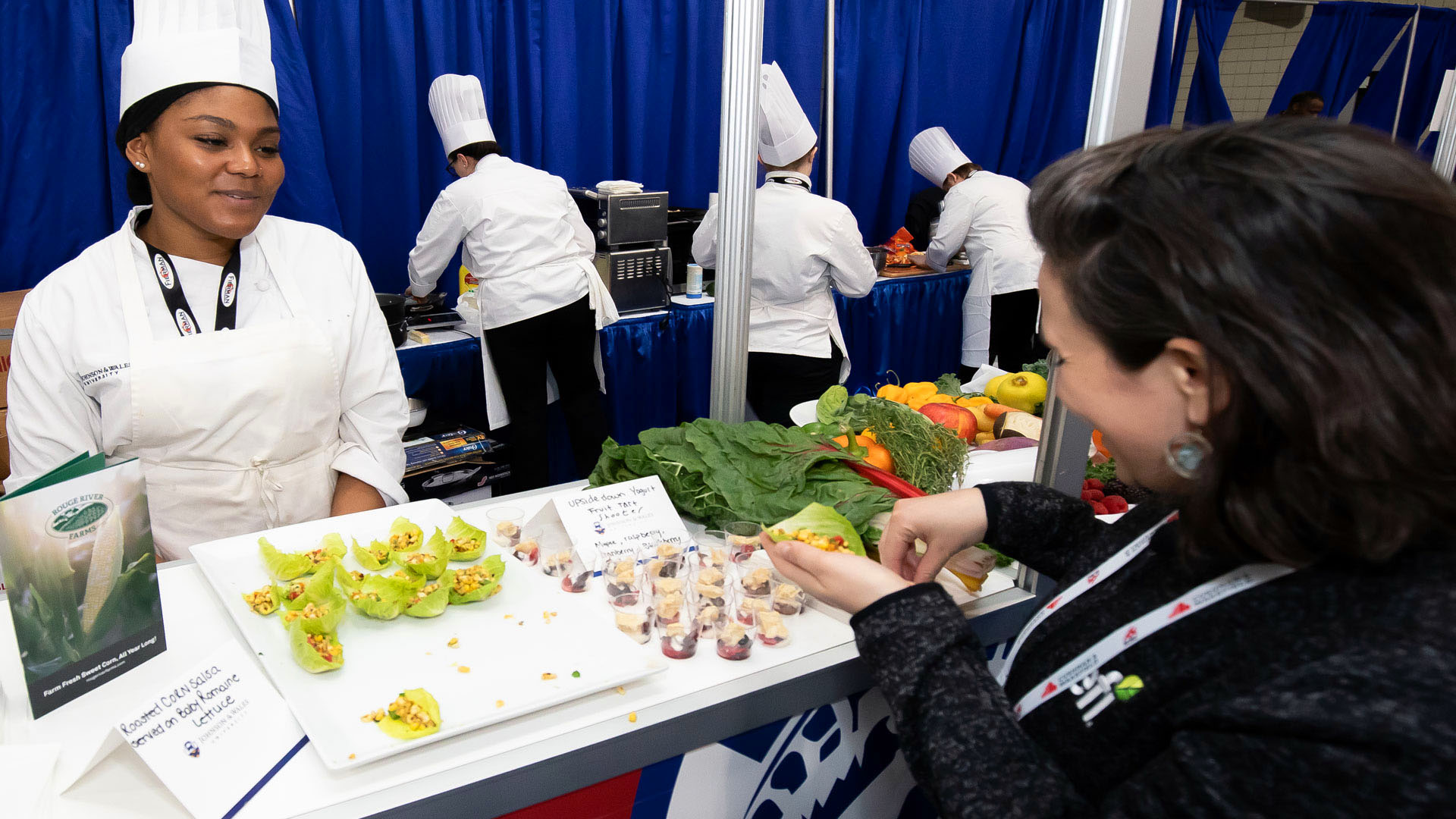
A trip to the Big Apple for the annual New York Produce Show and Conference, the second largest produce trade show in North America, was an exciting experience for six students. We had the opportunity to compete, network and assist celebrity chefs with their demonstrations.

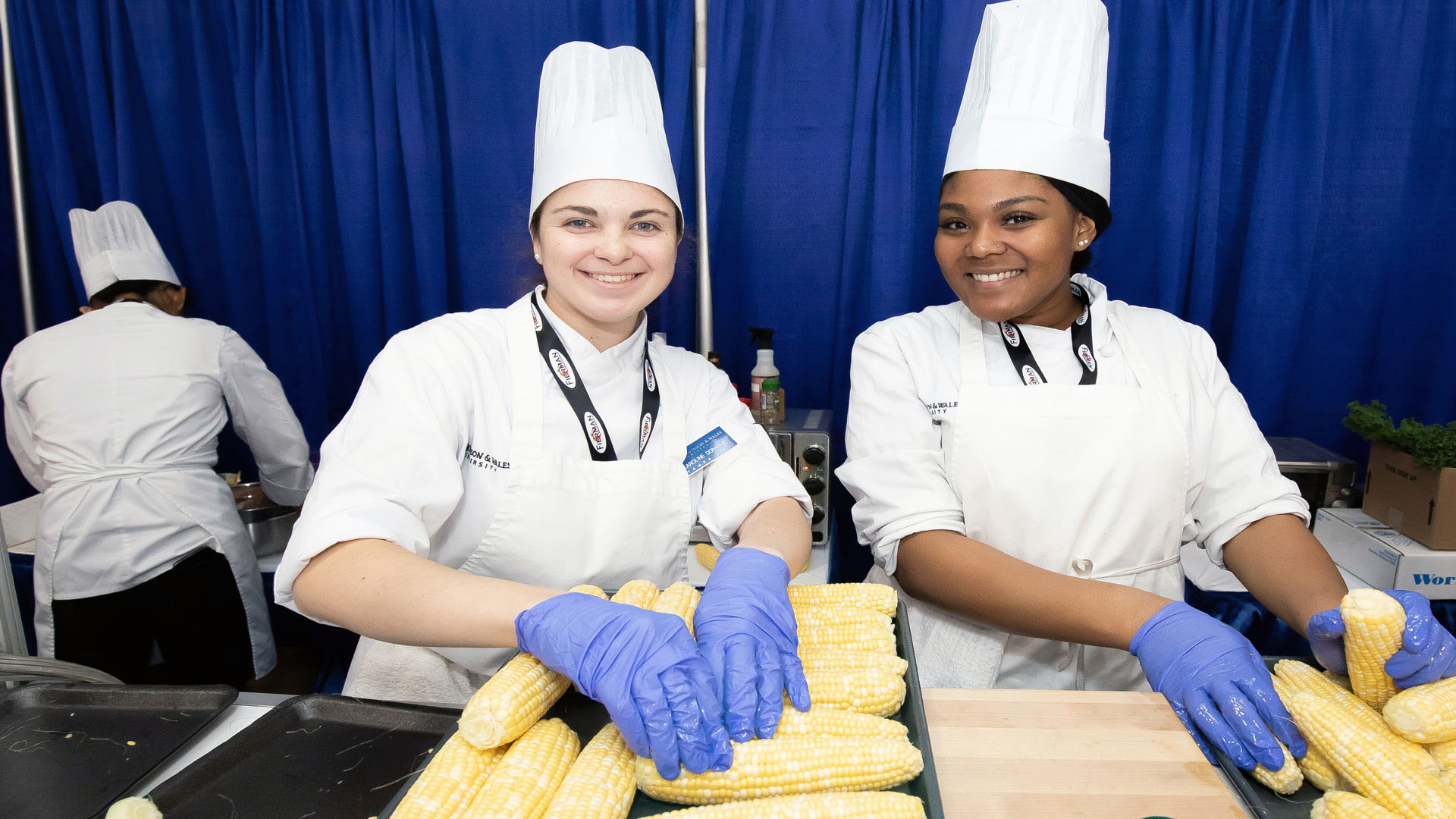
The excursion was led by Associate Professor Doug Stuchel of the College of Hospitality Management (COHM). The JWU students who attended were Jessica Bohannon ’21, Ryan Farley ’22, Steven Ko ’20, Tiffany Lor ’20, Laura Wharton ’20 and myself. Students from Cornell, Virginia Tech and the Culinary Institute of Michigan (CIM) also attended.
Caroline-donahue-and-laura-wharton

One of the first things we did was visit the Javits Convention Center to meet with six representatives from CIM. Then we got to work setting up our station for the Culinary Innovation Challenge with a mix of kitchen equipment. We spent the afternoon sightseeing and enjoying lunch at Jose Andres' Mercado Little Spain, a Spanish food concept with kiosks and restaurants.

That evening, we attended a formal dining event, the Celebrating Fresh networking reception, where we met vendors, distributors and hospitality students from other universities. I talked to several of the vendors about why they come to the show. A representative from Village Farms, headquartered in Canada and Florida, said the company “grows produce in Texas, Canada and Mexico, but [they] come to the New York Produce Show every year because it gives distributors a chance to connect with buyers.”


A Dayka & Hackett representative said they attend “because they’re locals, supporting locals who like to come [to the conference] to connect with customers in a different setting.” Dayka & Hackett is a farming, shipping and sales organization based in California. It was interesting to meet and talk with these professionals about their perspectives on the world of produce.

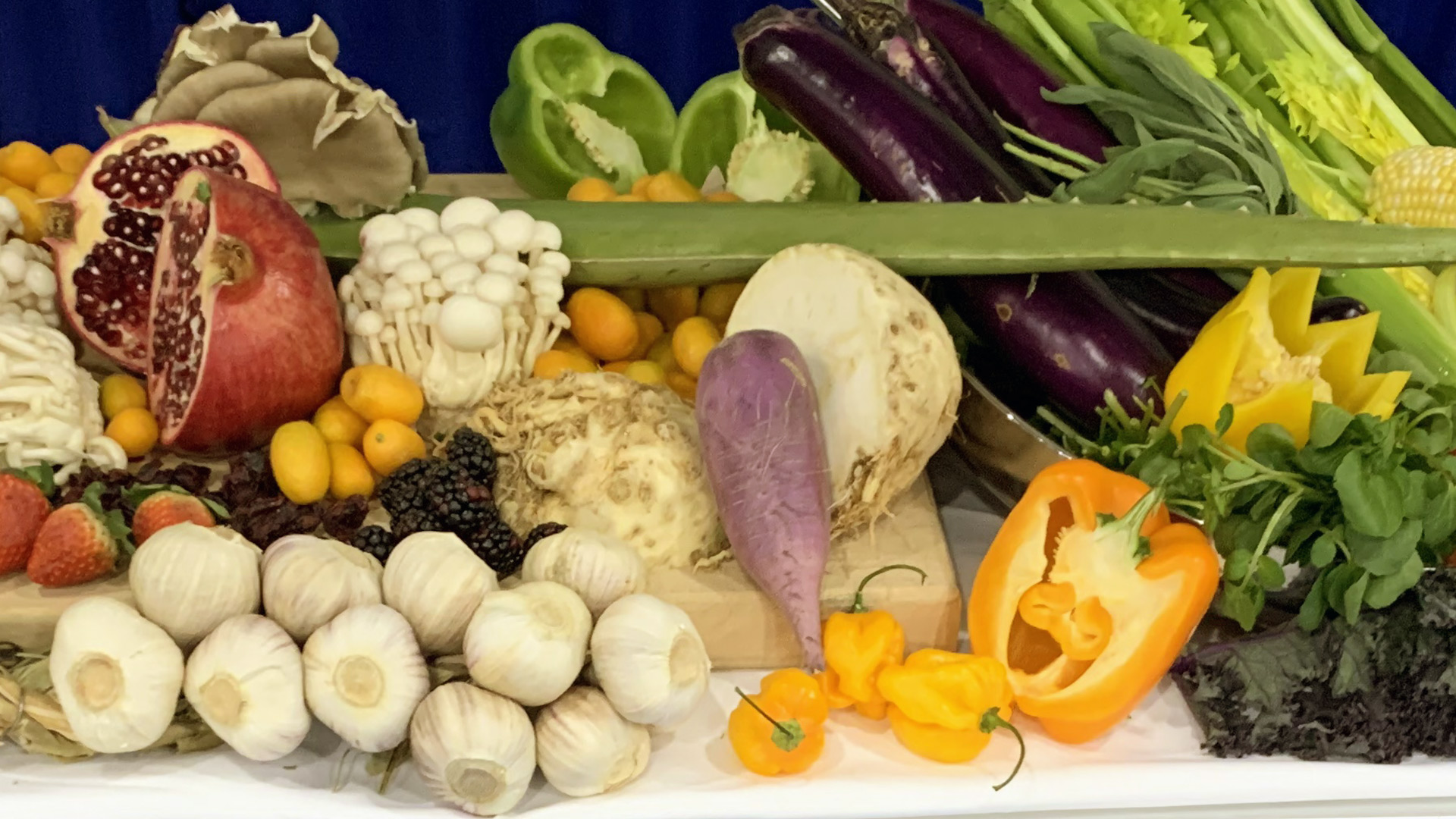
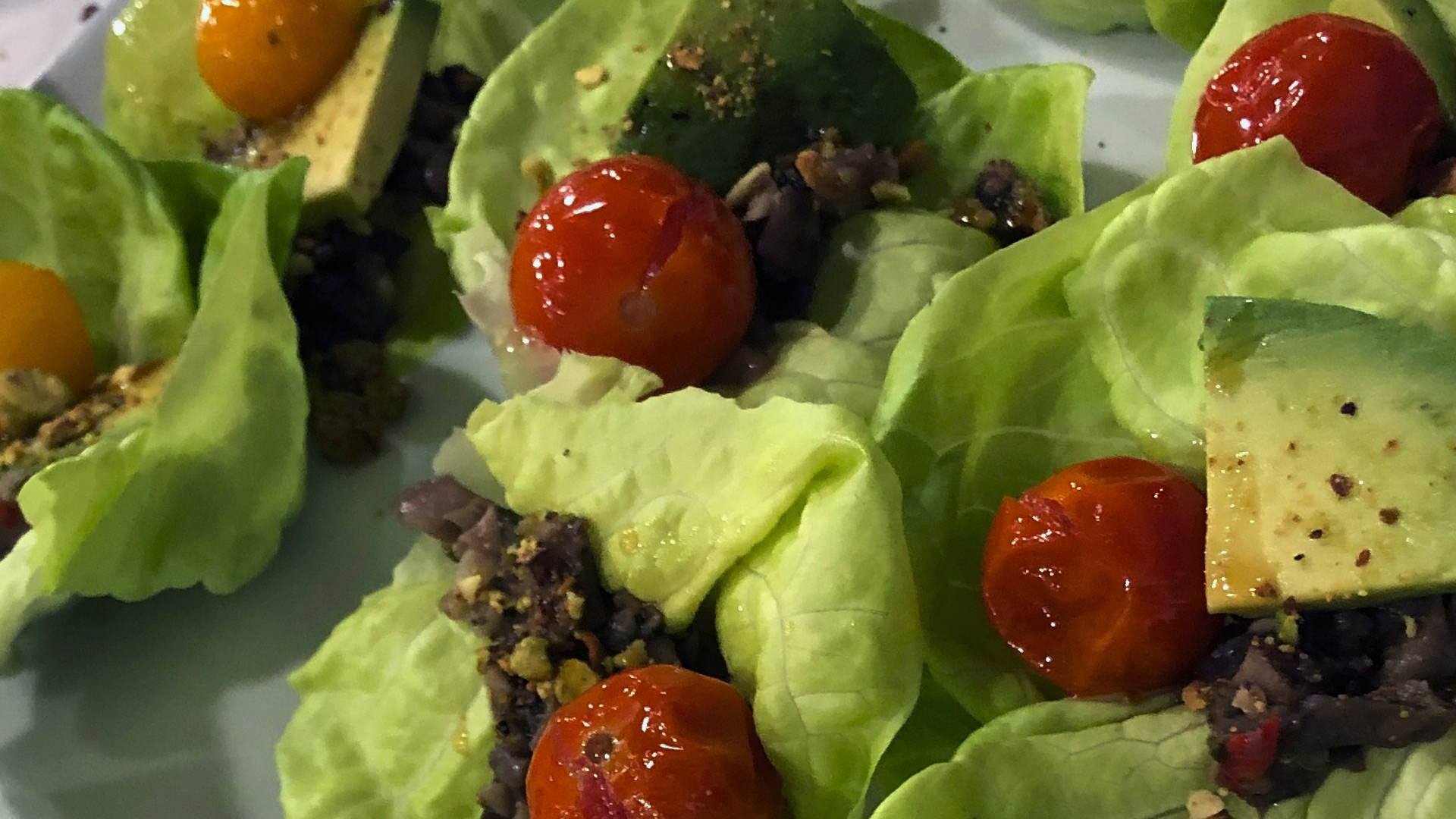
The next day we got to put our culinary skills to work while cooking for the Culinary Innovation Challenge with CIM students and assisting celebrity chefs with their demonstrations. At the start of the “friendly” challenge (with no winners or losers), we were given bags for foraging the tradeshow for ingredients to use to create unique “veggie-centric” foods.
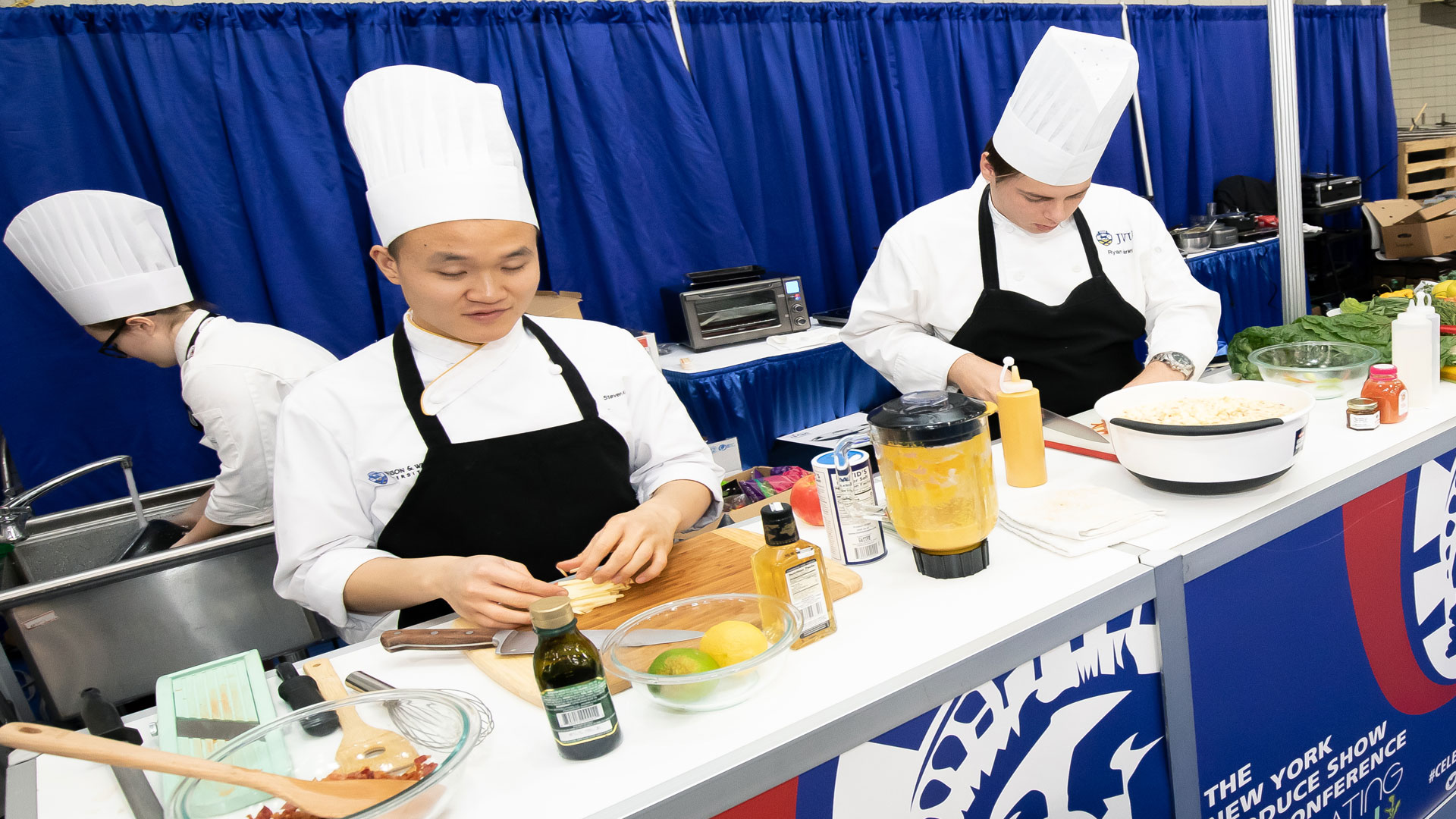
steven-ko-and-ryan-farley

The Ideation Fresh Foodservice Forum on our last day featured a panel of industry leaders, including
  • Will Horowitz, owner and executive chef, Ducks Eatery
  • Tim Beerup, Midwest retail manager, National Mango Board
  • Ian Ramirez, director of culinary innovation and operations, Creative Dining Services
  • Dan Coudreaut, founder, Coudreaut and Associates
  • Christopher Gaulke, food & beverage management professor, Cornell University


The panelists were asked questions about topics affecting the produce industry.

Q. Where does your inspiration for innovation come from?
Will: “By looking into the past, into nature and by using all scraps.”
Tim: “Global influences are a big inspiration because they are exotic foods with authenticity.”

Q. How do growers contribute to inspiration?
Ian: “By hyper-focusing on one ingredient through immersion, and working with commodity boards [boards that address an agricultural commodity].”

Q. How do you narrow the field of making a product?
Dan: “Through discovery, development and deployment.”
Christopher: “See if customers want the product, then see if customers want the product from you.”

associate-professor-doug-stuchel

Another highlight of the conference was honing our skills while assisting celebrity chefs Ian Ramirez, Will Horowitz, Mark Arnao of the St. Regis New York, and Jehangir Mehta of Graffiti Earth. Gaining expertise under their guidance was an exciting experience.

“I left New York with fresh knowledge about produce and food trends, and with a stack of business cards from all of the connections I made.”

The conference ended with the Ideation Breakout luncheon that included a presentation by students and industry leaders about their ideas for creating products that meet specific consumer demographics. Some examples were a granola bar for a small-town elementary school and a soup menu for an elderly home.
Looking back on the trip, the New York Produce Show and Conference was an unforgettable adventure with opportunities to learn, create and network. I went to New York feeling eager, and bringing only a tasting menu I created before the event. I left New York with fresh knowledge about produce and food trends, and with a stack of business cards from all of the connections I made.
I look forward to seeing how the event evolves in the future and intend to continue going even after graduating from JWU.


Thursday, January 23, 2014

Chefs Demonstrate Produce-Centric Dishes At New York Produce Show-By Paul Frumkin

Chefs Demonstrate Produce-Centric Dishes At New York Produce Show


By Paul Frumkin

Chef Stuchel & his team at the 2013 New York Produce Show- This marks the third year in a row Chef Stuchel has taken Johnson & Wales University Students to participate in this terrific show.

Chef Alain De Coster remembers the days when a typical restaurant vegetable plate meant pale little piles of steamed spinach, green beans, cauliflower, peas and carrots arranged on a dish with perhaps a poached egg placed in the center.
Chef Alain De Coster

But those days are long gone, declares the lead chef-instructor at The International Culinary Center in New York City.
“Something like that would be unthinkable today,” De Coster says during a culinary demonstration at The New York Produce Show and Conference. “Consumers are demanding much more when it comes to produce, and chefs are eager to give them what they want. The quality of the produce coming out today is phenomenal, and a well-thought-out vegetable plate can really show a chef at the top of his game. If you have a combination of beautiful vegetables — an explosion of flavors — they can take you in a wonderful direction.”
This new, more sophisticated focus on vegetables and fruit was apparent everywhere at the three-day show in New York. Professional chefs and culinary educators demonstrated to attendees how far the treatment of produce has progressed in restaurants, from being almost an after-thought of menu development to sharing star billing with costly proteins.
“One thing about vegetables — we can sell them as a main course like that,” says chef-restaurateur David Burke, snapping his fingers.
Such culinary experts as Kerry Heffernan, Joe Quintana, Mark Weiss, Burke and De Coster, as well as instructors and students from Johnson & Wales University and Le Cordon Bleu College of Culinary Arts, carried this produce-centric message through the show.

The event, presented by the Eastern Produce Council and Produce Business magazine, showcased nonstop celebrity chef demonstrations throughout the second day at Pier 94 in Manhattan. At the same time, culinary instructors and their students roamed the show floor, foraging among participating exhibitors for fruits and vegetables they could transform into cutting-edge preparations at their Culinary Innovation Stations.


The demonstrations were sponsored by Bejo Seeds Inc., Earthbound Farm, East Coast Fresh, Five Star Premium Greens & Herbs, Hooray Purée Inc., Mann Packing, PRO*ACT, Rainier Fruit Co. and Tasti-Lee Tomatoes.
During the demonstrations, participating chefs shared their recipes and cooking techniques for popular produce-based dishes. Joe Quintana, regional executive chef for the 15-unit Rosa Mexicano restaurant chain, discussed the upscale Mexican concept’s signature dish, guacamole made-to-order tableside. “Each restaurant consumes an average of nine cases of Hass avocados each day,” Quintana said, “for a total of more than a million avocados a year chainwide.”


Rosa Mexicano’s recipe for guacamole calls for avocado, onions, jalapeño chilies, cilantro and tomatoes, prepared with a traditional molcajete y tejolete — or mortar and pestle — at each table.
Avocados are not the only high-volume produce item used by Rosa Mexicano, Quintana says. Each restaurant uses 40 pounds of tomatillos and 35 cases — weighing 15 to 20 pounds per case — of cilantro each week, both of which are included in its salsa verde.
For the event, Quintana also prepared Sopa de Calabaza de Castilla a la Mexicano, or pumpkin puree soup. The recipe calls for pumpkin puree, olive oil, onion, garlic, jalapeños, Mexican cinnamon, allspice berries, cilantro and heavy cream. The soup is garnished with pepitas, or pumpkin seed croutons.
“Produce plays a big role in menu development at Rosa Mexicano,” he says. “We try to bring something special to the flavors of Mexico.”
De Coster also prepared a pair of dishes showcasing a range of vegetable and fruit items during his demonstration. For his first dish, he combined both fruit and vegetables in an onion medley, baby spinach, seasonal mushroom and Lady Alice apple torte. The tourte incorporates a variety of onions (cippolini, red and white pearl onions and shallots) and mushrooms (oyster, chanterelles, button or shiitake).
For his second dish, he prepared a Pissaladière Monégasque, a pizza-like tarte from the south of France. The crust is topped with white onions, a fondue of tomatoes, baby arugula leaves, garlic, thyme, coriander, anchovies, and black pitted kalamata olives.
De Coster acknowledges the new wave of awareness surrounding produce. “There is an emerging movement to show just how good produce can be,” he says. “Chefs are more demanding when it comes to purchasing, and we’re seeing that in the farm-to-table trend. It’s all about taste.”
David Burke, executive chef and owner of the New York-based David Burke Group — which includes David Burke Townhouse, David Burke Fishtail and David Burke Kitchen — acknowledges that professional “chefs are no longer treating vegetables as secondary citizens. Now you’ve even got stars, like the ’magical vegetable’ kale. Isn’t it amazing how something can be around for decades and then it becomes a star?”


Burke demonstrated the versatility of the “magical vegetable” when he prepared a vegetable torte with charred kale and kale-whipped potatoes that also includes roasted cauliflower florets, zucchini, yellow squash, red peppers and eggplant. “Tortes can be a rich, hearty vegetable dish,” he says.
The veteran chef says he expects to see fruits and vegetables elbow their way further into the spotlight in restaurants, which also is likely to result in smaller portions of meat and fish. “Even at steakhouses we’re seeing clever side dishes with produce,” he says. “And it’s economical for us. Vegetables can weave in and out of any menu.”
Growers are helping to drive these new trends in produce usage, he adds. “Growers have listened to chefs — we’re getting better vegetables. Today, we can get whatever we want from suppliers. For example, when it comes to herbs, everything in the world is at your fingertips.”
Kerry Heffernan, who honed his culinary craft at such New York restaurants as Montrachet, Bouley, Eleven Madison Park and South Gate, told attendees that adding a variety of produce to menus allows chefs “to take things in new and challenging directions.” As an example, Heffernan prepared a salad pairing oranges with carrots. “We’re definitely seeing produce used in different ways,” Heffernan says.
Featuring the freshest ingredients also has become something of a mission for many chefs. Restaurant customers, he says, “are even used to seeing root vegetables like carrots and turnips served with the tops still on, which is an indication of freshness that translates to [the dish] being more nutritious.”
Heffernan also discussed how certain vegetables, such as kale, have emerged as culinary stars and how this trend is expected to continue and grow. Citing potential candidates for future menu stardom, Heffernan points out, “Leeks are wonderful and don’t get enough attention. Rutabaga is the unheralded star of the winter produce spectrum, and salsify also bears a lot of interest. Dill is due to make a comeback, too.”
Mark Weiss, a professionally trained culinarian who bills himself as the “DJ Chef” and accompanies his cooking demonstrations with music, demonstrated the preparation of several dishes, including sautéed shrimp flavored with garlic, jalapeño peppers and red wine, served in scarlet butter lettuce rose cups.


Like many of his other professional colleagues, Weiss cites the widespread farm-to-table movement as being an important trend that is helping to shape menu development. “Produce is all about fresh and flavor now,” he says. “People are so conscious of what they’re eating these days.”
Weiss also predicts that scratch-made preparations and gluten-free dishes will continue to take on added importance in the foodservice industry.


Foraging Young Chefs
Meanwhile, as chefs demonstrated the importance and versatility of fruits and vegetables in the menu development process, culinary school educators and their students fanned out across the exhibition floor with the mission of bringing back a cornucopia of interesting produce that would enable them to prepare cutting-edge dishes at their Culinary Innovation Stations.
Douglas Stuchel, assistant professor at the Hospitality College of Johnson & Wales University, Providence, RI, says his school’s four participating students were sent out with foraging bags to gather ingredients early in the day, after which they returned to the station to prepare anywhere from 20 to 30 different dishes. Every recipe had to serve 50 portions.
“We had about an hour or so to forage, and then we cooked for seven hours,” he says, comparing it to a “mystery basket” competition.


Fourth-year pastry program student Michelle Johnson said the students were nervous at first but got used to the action of foraging quickly. “It was exciting,” she says. “We had some ideas before we went in and then started foraging.” She says the group gathered “a lot of mushrooms, onions, potatoes, avocados and tons of herbs.”
Among the team’s dishes was a savory fruit salad containing fresh fruit with pine nuts and fresh herbs like thyme, rosemary and chives. “People are more willing to experiment with sweet and savory flavors,” Stuchel observes.


John Abels, lead instructor at Le Cordon Bleu College of Culinary Arts, Chicago, IL, also led a team of four culinary students participating in one of the two Culinary Innovation Stations at Pier 94. He said his students visited about 15 exhibitors who had agreed to take part in the event, from which they brought back such items as potatoes, kale, baby fennel, fingerling potatoes, and finger limes. Jefferey Brown, one of the students, says the group foraged for more than an hour before returning to their station to begin preparing the dishes.
Among the preparations was an apple crisp, made with Lady Alice apples, dusted with salted caramel powder (made by creating a buttery, salted caramel toffee and blending it in a food processor with tapioca Maltodextrin, a food-grade chemical that converts fat to powder). The group also prepared a beet salad with candied walnuts.


Commenting on the show, Abels calls it “a tremendous learning experience for our students. It taught them several new skills — for instance, communicating with vendors, identifying quality produce, sourcing new products and thinking critically on their feet.

“I am always impressed at the magnitude of this segment of the industry,” he adds. “This is the third year I’ve been here, and there is more produce every year.”

Friday, August 2, 2013

Compass Group USA Faculty Internship: Charlotte, NC- Day Four

Day 4


Day four we visited Presbyterian Medical Center and the Duke Mansion.  The Presbyterian Medical Center foodservice is handled by Morrison and the Support Services by Crothall.  I was impressed with the high level of nutritious and tasty food offered to both patients and the retail guest. As well as the efficiency and high level of customer service offered by Crothall.


Morrison Healthcare Food Services, a member of the Compass Group, is the nation’s only food service company exclusively dedicated to providing food, nutrition and dining services to hospitals and health systems. Our Atlanta-based company serves approximately 585 acute care clients in 41 states, including some of the largest and most prominent integrated healthcare systems in the United States. The Morrison Way Morrison is guided by a personal mission statement called "The Morrison Way"“I am Morrison. I am a Professional. Through my actions I earn the trust of my clients, customers, and team members. My team and I are focused on meeting our clients’ needs and keeping our customers for life. I believe continuous learning improves my contribution. My work creates profit for our company and opportunity for me by creating value to our clients.”

Presbyterian Medical Center (Presby) - Retail Foodservice


TRIM MAX PROGRAM
The Trim Trax program is designed to minimize food waste during the production process. Team members are asked to place all food trimmings into marked containers. Such trimmings include peels from cucumbers, apple cores, watermelon rinds and various other non-edible food waste, which often contain edible food trimmings that were mistakenly cut away. By collecting all waste and measuring the total, management can monitor how much edible food is being wasted. The program allows for continuous feedback and serves as a great educational tool for all involved.


Presbyterian Medical Center (Presby) - Patient Foodservice


Presbyterian Medical Center (Presby) - Support Services:  We spend a few hours with the wonderful managers of Crothall who discussed there role in the cleaning of the hospital and for patient transport.  The have a terrific and very friendly staff working for them and keep the hospital running efficiently.

Crothall Healthcare was founded in 1991 to address the need for a specialized, high-quality, innovative, and responsive support services company, exclusively serving the unique needs of the healthcare industry.Today, Crothall Healthcare is composed of specialized professionals utilizing proven processes and tools, in the exceptional performance of five core support services:


The Duke Mansion

Eurest operates the food and beverage at Duke Mansion for catering and for the 20 room bed & breakfast.  Built in 1915 and tripled by its most famous owner James Buchanan Duke 
The Duke Mansion has been home and host to leaders of the 20th century. Duke’s most lasting legacies, including Duke University, Duke Energy and the Duke Endowment, took shape at the home. Listed on the National Register of Historic Places, The Mansion is operated as a nonprofit with all proceeds being used to preserve and protect this community treasure.


Thursday, August 1, 2013

Compass Group USA Faculty Internship: Charlotte, NC- Day Three

Day 3

We encountered the Business and Industry (B&I) segment on day three as we visited TIAA- CREF and Bank of America both of which are Eurest Accounts.


As a member of Compass Group North America, the global leader in contract foodservice, Eurest can offer your company access to a range of their exceptional foodservice solutions. From corporate dining, restaurants, hospitals, sports & entertainment to school cafeterias, Compass Group can provide your business with comprehensive foodservice management and support.

The following are some pictures from the TIAA-CREF account:


Here are some of the marketing and promotional signs focused on sustainability and the wellness 


The Chef and the Foodservice Manager


Integrated technology


Concern for the planet and sustainability 


Additionally we had some extra time so we got a chance to visit another Canteen account at SHUTTERFLY


The employees of Shutterfly are able to eat out of the vending machines at a deep discount (e.g. .25-$1.00 per item) because they are not permitted to leave the building during their breaks


The Dining Room


Coffee Station for the Board Room


The unman Avenue C Market concept that uses cameras and thumbprint scans and technology to complete a purchase


The following are pictures from the Bank of America account


Due to restrictions on photography I was only able to take very limited pictures.  We visited the Taste Food Concept as well as the Bank of America Corporate Dining Room on the 59th floor as well as the BAC Conference Center. 

There were many impressive sites to be seen on the 59th floor with the artwork and decor.  The foodservice managers, chefs and staff were very hospitable and are very passionate.